
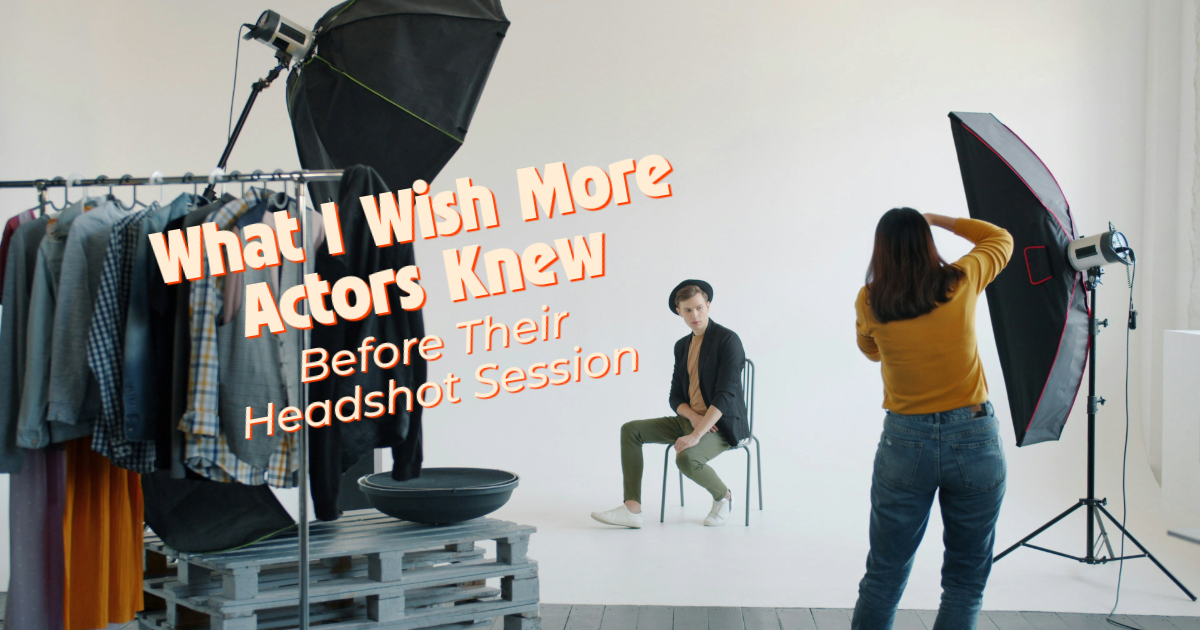
What I Wish More Actors Knew Before Their Headshot Session
Actor Headshots Tips & Guides, Headshot Tips & Guides
Before booking actor headshots, it helps to understand what your photos actually need to do. Here’s what I wish more actors knew about casting types, commercial vs. theatrical headshots, wardrobe, posing, retouching, and getting images that feel honest, specific, and useful.
Actor headshots are not simply a nice photo of yourself. An actor’s headshot has a job to do, and it is an important one. It needs to show casting directors, agents, managers, and creative teams a clear version of who you are and how you might be cast. For many people in the industry, your headshot is your first introduction, so it has some heavy lifting to do.
After photographing a lot of actors, especially actors who are just starting out, there are a few things I wish more people knew before their headshot session. A little more clarity before the shoot can make a huge difference in the final images, help you make smarter choices, and save you from spending money on headshots that do not actually serve you.
Know the Types You Are Trying to Capture
Before your headshot session, it helps to think about how you are likely to be cast.
Are you often the best friend, the young professional, the detective, the lawyer, the teacher, the villain, the romantic lead, the quirky coworker, the sarcastic sibling, the wealthy club member, the tired parent, or the nervous assistant? You do not need to box yourself in completely, but you should have some sense of the lanes you belong in. One of my biggest tips is to start with your casting age range. This is so helpful because it narrows down the kinds of roles you would realistically be going out for.
If you are castable in the late teens to early 20s, you are probably not going to be going out for the CEO or parent roles. You are more likely to be focused on student, young adult, coming-of-age, best friend, or person-next-door types of roles. A headshot session is much stronger when you are creating different looks that each communicate roles you can actually play. That is why wardrobe matters. Expression matters. Energy matters. A clear focus for each look can completely shape the story of the headshot.
Commercial and Theatrical Headshots Are Not the Same
Commercial and theatrical headshots have different goals. A commercial headshot is used for roles in advertisements, which means you would be representing a brand. Casting is looking for actors who feel warm, approachable, funny, relatable, trustworthy, and inviting. Think about a big brand like McDonald’s. They aren't looking for a dark, moody, intimidating actor to represent a Happy Meal commercial. They want someone who feels friendly, open, and fun.
Your commercial headshots should match that kind of energy. Brighter backdrops, personality in your wardrobe, and warm expressions all help create an image that is best for commercial casting. A theatrical headshot is different. These headshots are used for theatre, TV, and film roles, which means the image often needs to suggest more depth, range, and emotional complexity. Theatrical roles can be much more specific and varied.
You might be playing someone guarded, ambitious, intense, vulnerable, dangerous, heartbroken, sarcastic, exhausted, powerful, awkward, or mysterious. Understanding the kinds of theatrical roles you can realistically play helps you narrow in on headshots that actually support your career. Once you know the direction of the look, it helps to channel that character while we are shooting.
The goal is not to overact in your headshot, but to bring enough intention into the image that casting can imagine a person with a backstory, a point of view, and an arc. I break down the differences in more depth in this blog post: What’s the Difference Between Commercial and Theatrical Headshots? For actors, understanding what you are aiming for matters.
If you are focused on commercials, TV and film, theatre, or a combination of all three, knowing the difference before your headshot session helps you choose the right kinds of images to create.
Wardrobe Should Support the Character
Wardrobe matters a lot in actor headshots. I do not think your clothing needs to be boring or overly plain. In fact, I strongly believe in looks that have personality, especially if we are creating a specific type or character direction.
The right jacket, color, neckline, texture, or layering piece can immediately help the photo feel more specific. The key is that the clothing should support the character we are trying to create. If we are going for young professional, detective, lawyer, wealthy club member, cool best friend, artist, teacher, villain, or quirky office mate, the wardrobe should help us get there. It should give the image a clearer point of view. What we want to avoid is clothing that distracts from the story of the headshot.
Big logos, pieces that feel overly stylized, or choices that are too out of the box can make the casting idea less clear. It is about finding the balance between too simple and over-the-top. Actor headshot wardrobe is not about dressing generically. It is about dressing intentionally. I go into this in much more detail in my wardrobe guide, What to Wear for Headshots: The Ultimate Actor’s Wardrobe Strategy Guide , but the main idea is this: every clothing choice should help the photo communicate something useful.
You Do Not Need to Know How to Pose
A lot of actors come into their headshot session worried that they do not know how to pose. That is completely fine. You do not need to arrive knowing exactly what to do with your face, body, or hands. A good headshot photographer should be able to understand the casting type you are aiming for and direct you in a way that helps you get there. The direction should not just be about tilting your chin or turning your shoulders.
Those things matter, but the stronger part of the session is helping you connect to the person you are trying to portray.