
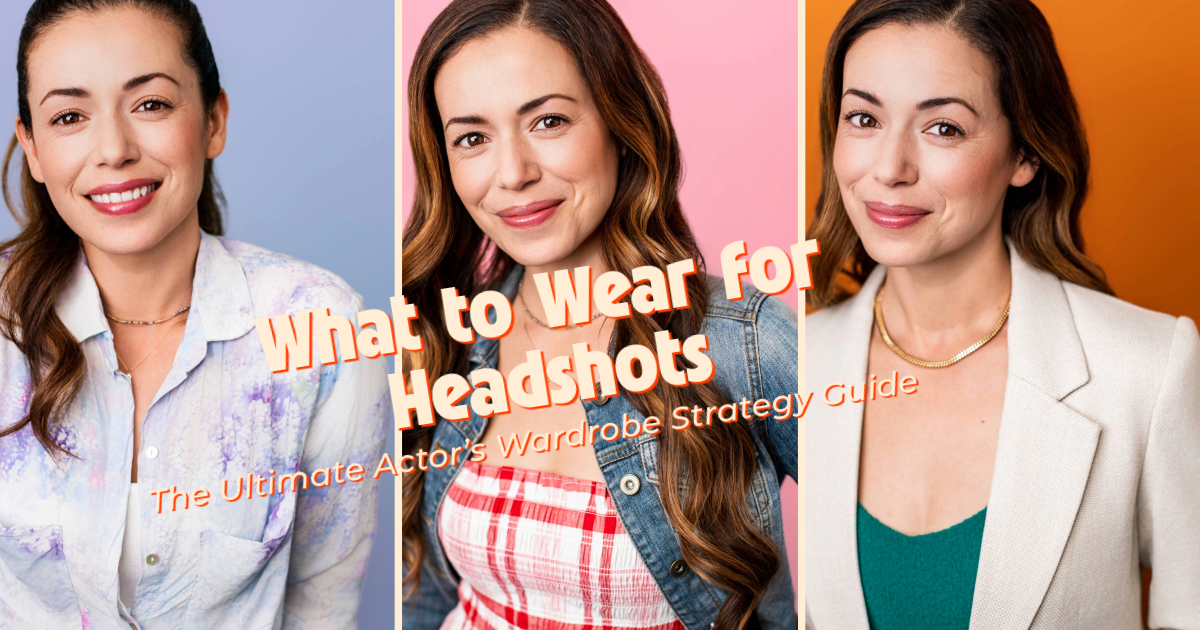
What to Wear for Headshots: The Ultimate Actor’s Wardrobe Strategy Guide
Headshot Tips & Guides, Actor Headshots Tips & Guides
Struggling with headshot wardrobe? Learn how to choose outfits that showcase your casting type and make a strong first impression.
Let’s Burst the Bubble—You Have to Do Some Work!
”—I hate to break it to you, but there isn’t one. Your headshots are your first impression. If they aren’t saying anything , you’re missing opportunities. And if you keep spending money on new headshots without understanding how to make them work for you , you’ll keep getting them wrong. 💡 Headshots aren’t about you—they’re about the characters you can play. They’re a casting tool. They tell the industry where you fit and whether you’re right for a role.
When a casting director scrolls through hundreds of actors for a commercial, TV show, or movie , they need to immediately see you as the character. So grab a pen and paper—or open your Notes app—and let’s get strategic. 👉 How do you dress for the roles you can play? Let’s get into it! The Importance of Headshots & Why Your Wardrobe Matters A great headshot isn’t just a pretty picture—it’s your calling card in the industry, the first impression you make before you even step into an audition room.
Headshot checklist: ✔ It needs to look like you. ( Yes to makeup but don't overdo it—casting needs to recognize you when you walk in the door. ) ✔ It needs to reflect the roles you can play. ( Your personal style doesn’t matter—your headshot is about your casting type. ” ( They don’t have time to guess if you fit the role—it should be obvious. ) Your Headshot is Your First Audition Your talent shines in the audition room—but what if you never get the chance to be in that room?
If your headshot doesn’t represent you as someone right for the project, you’re losing opportunities before you even get to prove yourself. Think about it: 🚫 If you're auditioning for a cop role but your headshot is you in a bright polo with a big, friendly smile, casting will probably overlook you . 🚫 If you typically play the quirky best friend, does an edgy, dark-toned outfit help sell that? Probably not. Your headshot wardrobe is part of the story you’re telling.
It should instantly communicate where you fit in casting. But how do you figure out what that story is? 👉 Let’s break it down.
Step 1: Know What Headshots You Need
Before you start picking outfits, you need to answer a key question: Do you need commercial headshots, theatrical headshots, or both? Commercial and theatrical headshots serve completely different purposes —and if you don’t understand the difference, your headshots will lack focus and won’t market you effectively.
📸 Commercial Headshots → For Commercial Work ( Surprise! Commercial headshots are meant for commercials! ) Commercial actors are hired to represent a brand or company and sell a product or service . Your headshot should tell casting directors: ✔ You’re relatable, friendly, and approachable. ✔ You stand out in a way that makes you memorable. ✔ You look like someone they’d trust to sell a product. 💡 Think of it this way: If you can make an impact in a headshot, casting knows you can make an impact in a short ad.
🎭 Theatrical Headshots → For TV, Film & Stage Roles Theatrical headshots are character-driven, grounded, and reflect the depth of your casting range. Unlike commercial headshots, which are about selling a product , theatrical headshots are about selling your ability to disappear into a role. ✔ Your wardrobe should match the types of roles you audition for. ✔ Your expressions should be subtle but powerful—casting should feel the emotion behind your eyes.
✔ If you play troubled or intense characters, your shot should reflect that. If you go out for romantic leads, your headshot should exude warmth. 💡 The goal? Casting should instantly see you in a role. They should feel your presence and know exactly what type of characters you play. ASSIGN YOUR LOOKS ACCORDINGLY Once you’ve booked a headshot session, it’s important to plan how many looks will be for commercial vs. theatrical —and that number depends on you.
🔹 Example: You’ve booked a four-look headshot session—now, how do you divide your looks? 🎭 If you're just starting out, the best strategy is to split evenly: 2 commercial, 2 theatrical. This gives you a balanced portfolio for different types of auditions. 🎬 If you're a working actor, assess your current headshots and figure out what’s missing. Do you already have strong theatrical headshots but lack commercial ones? Are your theatrical looks outdated, but your commercial shots still hold up?
Make sure each look serves a clear purpose in your portfolio . 🚨 Pro Tip: Never Try to Make One Look Work for Both This is a common mistake actors make to cut costs —but it dilutes both headshots. 🚫 A theatrical shot won’t work for a commercial audition. 🚫 A commercial shot won’t sell you for a dramatic TV role. 💡 Sometimes, a commercial look can double as a comedic theatrical character, but never force it just to pinch pennies. Instead, be intentional about each headshot and the role it serves.
If you try to make one shot fit both categories , you’ll end up with a weak, unfocused headshot that doesn’t serve you well in either arena.
Step 2: What’s Your Real Age Range?
This seems simple, but many actors struggle with it. You need to be honest and accurate about your age range. Trying to "catfish" casting—claiming you can play younger or older than you realistically can— will backfire. 🚫 If you’re 35 , you’re most likely not booking teen roles.
🚫 If you’re 22 , you’re probably not a "hardened, seasoned detective" yet. 🚫 If you’re a child, tween, or teen actor , don’t try to look more mature— be young as long as you can! But Aren’t There Exceptions? Of course! There are always exceptions to the rules. I’ve worked with actors in their 40s who still audition for teen roles. I’ve shot early 20-somethings whose look and energy skewed more mature. But exceptions shouldn’t define your strategy.
If you focus on what’s most believable for casting , you’ll land more auditions instead of chasing roles that don’t fit.